Key Takeaways
- Empathy in tech is a performance multiplier—not a personality trait.
- Engineers resist performative empathy but respond to structured clarity.
- Burnout comes from emotional overexposure, not empathy itself.
- Leaders must build systemic empathy, not personal emotional labor.
- Psychological safety scales empathy without draining energy.
Empathy in tech is widely demanded yet poorly understood. In high-performance engineering cultures, leaders are expected to care deeply while delivering relentlessly. The tension between emotional awareness and execution pressure makes empathy one of the hardest skills to sustain without burning out.
Why Empathy in Tech Feels So Hard
Empathy in tech environments often clashes with the dominant cultural norms of logic, precision, and speed.
Many technical leaders were promoted for competence rather than relational intelligence. They are rewarded for solving problems, not for sitting in ambiguity. When someone says “be more empathetic,” what many hear is: slow down, absorb emotion, and carry it.
That interpretation creates resistance.
Anecdote:
A senior engineering director once told me, “If I open the door to everyone’s feelings, I’ll never ship anything.” He wasn’t cold. He was overwhelmed. His calendar was full, attrition was rising, and product deadlines were non-negotiable.
Empathy felt like emotional debt.
The problem isn’t that tech leaders lack empathy. The problem is that empathy in tech is often framed as emotional absorption instead of strategic understanding.
Recent research reinforces this tension. According to McKinsey’s 2024 State of Organizations report, leaders who demonstrate high emotional intelligence drive 2.6x higher team engagement—but also report significantly higher exhaustion if boundaries aren’t defined.
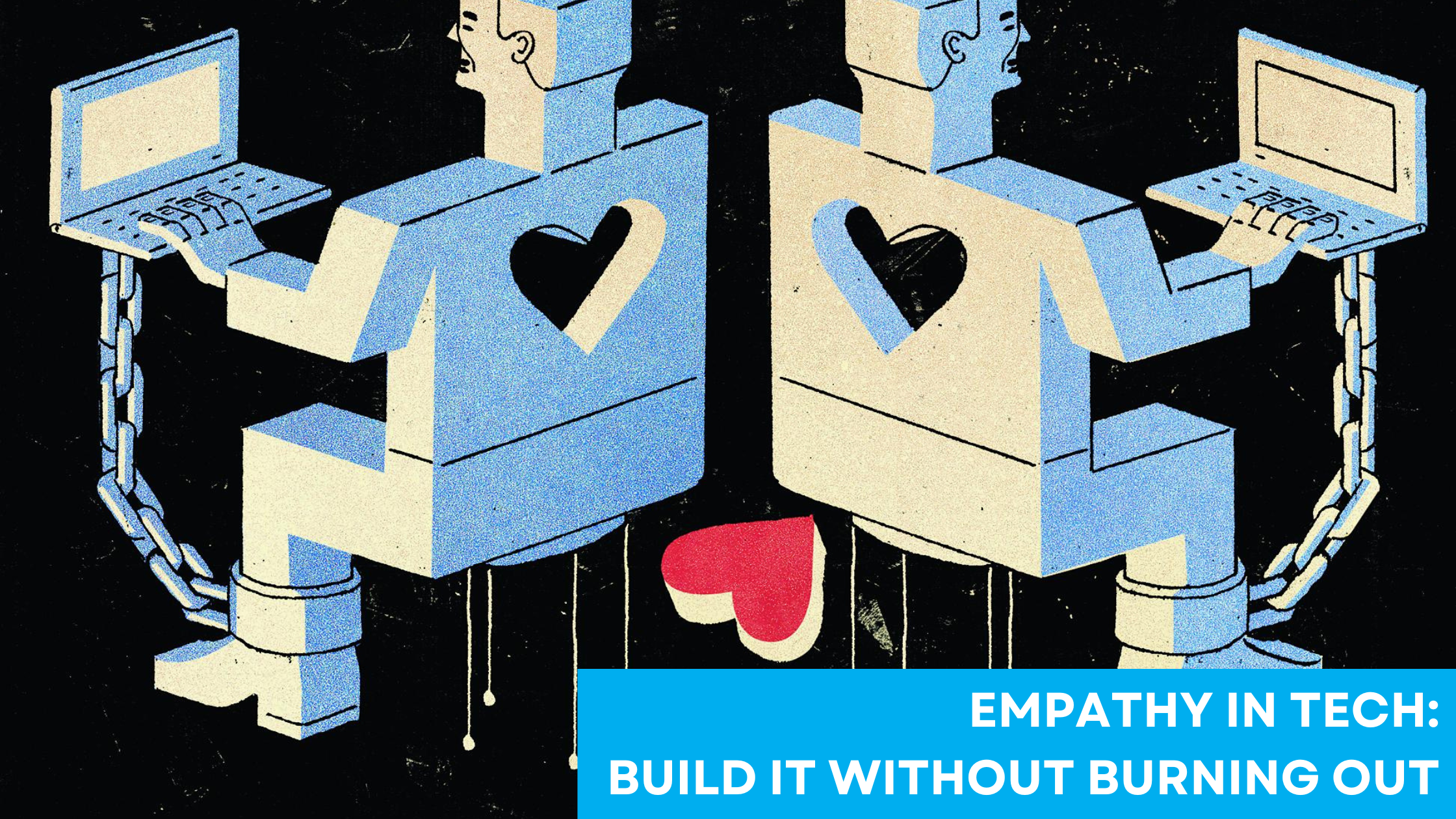
Empathy without structure becomes emotional overload.
The Hidden Cost of Misunderstood Empathy
When empathy in tech is misapplied, three predictable outcomes emerge:
- Leaders over-function emotionally.
- Teams become dependent instead of accountable.
- Burnout rises at the top.
Empathy is not rescuing. It is not constant validation. It is not emotional availability 24/7.
True empathy is the disciplined ability to understand someone’s internal reality without losing your own.
A 2024 Deloitte Human Capital Trends report highlighted that 71% of technology leaders feel responsible for employee well-being but lack systemic support to manage it sustainably.
That mismatch explains why empathy in tech often leads to fatigue.
When leaders internalize every frustration, delay, and emotional spike, they move from empathy to emotional overfunctioning.
That’s not leadership. That’s slow erosion.
Empathy in Tech vs Emotional Overfunctioning
Empathy in tech must be differentiated from emotional labor.
Here is the distinction:
| Dimension | Strategic Empathy | Emotional Overfunctioning |
| Focus | Understanding perspective | Absorbing emotional weight |
| Boundary | Clear | Blurred |
| Outcome | Clarity + accountability | Exhaustion + dependency |
| Energy Cost | Sustainable | Draining |
| Leadership Impact | Increases trust | Reduces authority |
Strategic empathy asks:
- What is this person experiencing?
- What constraint am I not seeing?
- What assumption is driving this reaction?
Emotional overfunctioning asks:
- How do I fix this for them?
- How do I carry this so they don’t feel discomfort?
One builds resilience. The other destroys it.
Harvard Business Review (2024) emphasizes that leaders who balance empathy with performance expectations create stronger cultures than those who lean exclusively toward support.
Empathy in tech must coexist with standards.
A Practical Framework to Build Empathy Without Burning Out
Empathy in tech becomes sustainable when leaders operationalize it through structure.
Here is a field-tested 4-step model:
1. Separate Emotion from Ownership
Ask: “Is this mine to carry?”
Understanding someone’s frustration does not mean solving it for them. Reflect it back, then clarify responsibility.
Example:
“I hear that the shifting requirements are frustrating. What options do you see within the constraints?”
Empathy + agency.
2. Use Curiosity Before Solutions
Engineers respect precision. Ask structured questions:
- What assumption is driving this concern?
- What risk feels unclear?
- What information would reduce uncertainty?
Curiosity prevents emotional escalation.
3. Set Emotional Boundaries Explicitly
Boundaries protect empathy.
You can say:
“I want to support this, but I can’t respond to Slack after 8 pm unless it’s critical.”
Clear limits prevent silent resentment.
4. Build Systems, Not Heroics
Empathy in tech scales when it becomes embedded in team norms:
- Clear decision frameworks
- Transparent priorities
- Defined escalation paths
When structure is in place, emotional volatility declines.
The Link Between Empathy and Psychological Safety
Empathy in tech is foundational to psychological safety—but they are not identical.
Psychological safety is the shared belief that the team is safe for interpersonal risk-taking. Empathy fuels it.
When leaders consistently demonstrate understanding without punishment, teams speak earlier. They surface risks faster. They admit mistakes sooner.
That is performance leverage.
This is where structured empathy aligns directly with psychological safety. Leaders who create safe environments don’t lower standards—they clarify them.
Empathy in tech becomes powerful when it supports candor, not comfort.
How Technical Leaders Can Operationalize Empathy
Empathy in tech must be visible in behaviors.
Here are tactical shifts that work in high-performance environments:
1. Run “Assumption Checks” in Meetings
Before debating solutions, ask:
“What are we assuming to be true?”
This validates thinking without validating errors.
2. Normalize Constraint Conversations
Instead of emotional venting, shift to structural clarity:
“What constraint are we optimizing for—speed, quality, or cost?”
Clarity reduces friction.
3. Use Decision Transparency
When leaders explain trade-offs, teams feel respected—even when disappointed.
Example:
“We’re prioritizing the enterprise client because it secures runway. I know that affects roadmap autonomy.”
Empathy acknowledges impact.
4. Model Regulated Emotion
Leaders who stay composed under stress create emotional stability downstream.
Emotional regulation is empathy’s backbone.
According to Gallup’s 2024 global workplace report, managers account for 70% of team engagement variance. The emotional tone leaders set directly impacts productivity and retention.
Empathy in tech is not soft. It is systemic influence.
Conclusion
Empathy in tech is the hardest skill because it challenges identity. Technical cultures prize certainty. Empathy introduces complexity.
But when done correctly, empathy is not emotional exposure—it is strategic clarity.
Leaders who master empathy without burning out:
- Understand without absorbing
- Support without rescuing
- Clarify without diminishing
- Regulate without suppressing
Empathy becomes a force multiplier.
In technology organizations where speed and complexity accelerate daily, the leader who balances performance and humanity wins in the long term.
Empathy in tech is not optional. It is a competitive advantage—if structured correctly.